
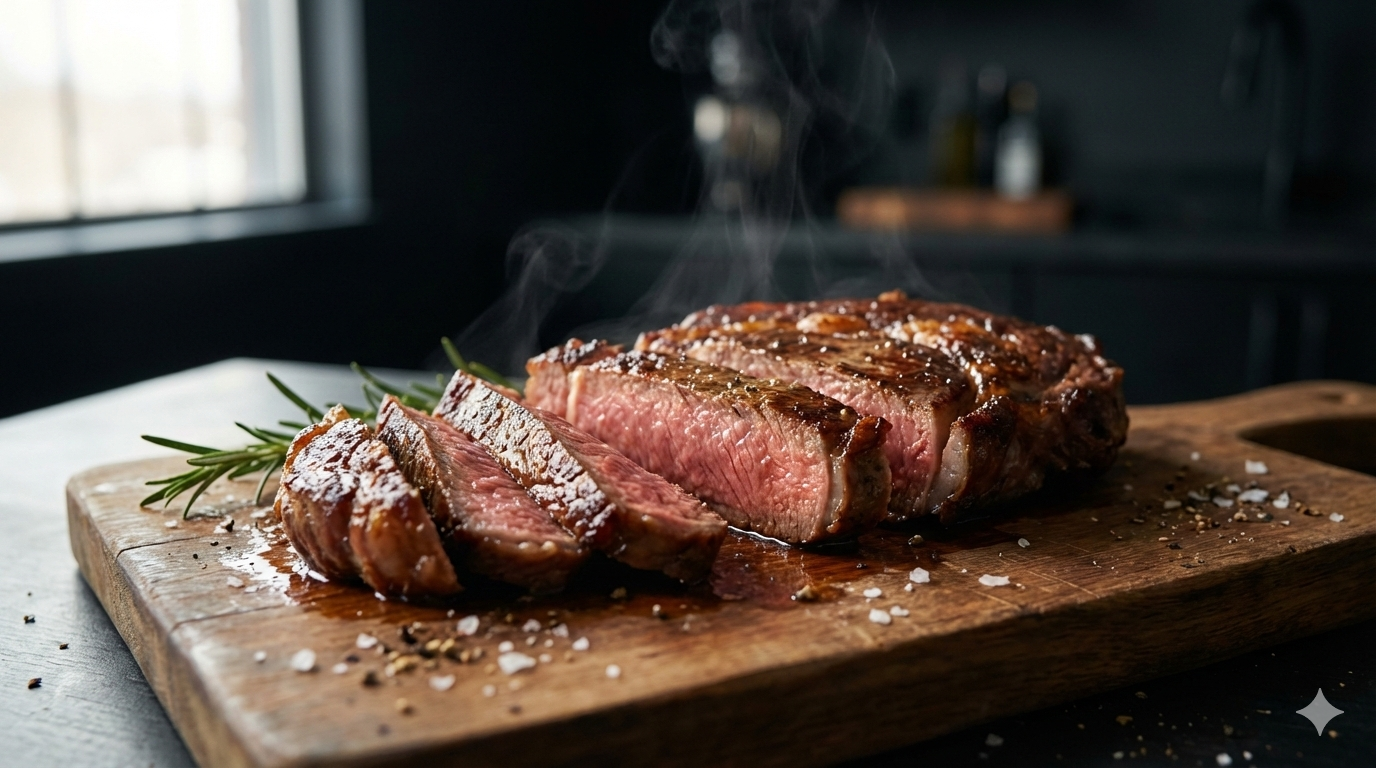
Let me be honest with you: I’ve made plenty of steak mistakes. I’ve pulled steaks off the grill too early and ended up with something that felt like it was still mooing at me. I’ve left them on too long and created something closer to a hockey puck than dinner. But somewhere along the way, I figured out the sweet spot, and that’s exactly what I want to share with you today.
A medium steak sits in this magical middle ground that most home cooks never quite nail. It’s the goldilocks of doneness, not so rare that it’s barely warm in the center, but not so well-done that you’ve cooked out all the flavor and tenderness. When you get a medium steak right, it’s absolutely incredible. There’s a slight pink center with a beautiful, caramelized crust that just sings. It’s the doneness that keeps meat juicy and tender while still being approachable for people who might be squeamish about rare beef.
In this article, I’m going to walk you through everything you need to know about achieving a perfect medium steak every single time. We’ll talk about temperature, timing, technique, and some secrets that restaurants use that you can replicate at home. Whether you’re cooking on a grill, in a cast-iron skillet, or using your oven, you’ll learn the methods that actually work. By the end, you’ll be cooking a medium steak that impresses everyone at your table.
Understanding What “Medium” Actually Means
Here’s where a lot of home cooks get confused. When you order a medium steak at a restaurant, what are you actually getting?
A medium steak has a warm, pink center that runs through most of the meat. It’s not bright pink like rare, and it’s not brown throughout like well-done. The outside should be browned and caramelized from high heat, creating that delicious crust everyone loves. Inside, the meat should be tender and juicy with that characteristic pink color that makes people know they’ve got something good.
The technical temperature for a medium steak is around 135°F to 145°F (57°C to 63°C) when measured at the thickest part. Most restaurants aim for about 140°F to 145°F, which gives you that ideal medium doneness. It’s warm enough that any potential bacteria get killed by the surface searing, but the inside stays pink and juicy. This is why medium steak balances safety with flavor and texture beautifully.
What makes medium steak so popular is that it works for almost everyone. People who are nervous about rare beef feel comfortable with it. People who want a really flavorful steak prefer it to be well-done. It’s approachable without sacrificing quality. That’s the real appeal.
Why Temperature Matters More Than You Think
Here’s something I learned the hard way: cooking a perfect medium steak is all about temperature control. Not time on the heat, not how it looks, not your gut feeling temperature.
This is non-negotiable if you want consistency. A meat thermometer is your best friend. I know some people think using a thermometer takes the fun out of cooking, but honestly, it’s the single best investment you can make for better steaks. You can find a decent instant-read thermometer for $20-$30 that will last for years and transform your cooking immediately.
Different thicknesses of steak cook at different rates. A thin steak cooks faster than a thick one. A cold steak pulled straight from the fridge cooks differently from a steak at room temperature. A steak near the heat cooks faster than one away from it. All these variables get eliminated when you just monitor the internal temperature and pull your steak off when it hits the target.
The carryover cooking effect is real and important. After you remove your steak from the heat, it continues cooking as it rests. The exterior stays hot and keeps transferring heat to the center. This means you should actually pull your medium steak off the heat at about 135°F to 138°F, not 140°F. By the time you let it rest for five minutes, it’ll coast up to that perfect 140°F to 145°F range.
Preparing Your Steak: The Foundation Everything Else Rests On
Before you even think about heat, you need to prepare your steak properly. This step is more important than most people realize.
Pat it completely dry. Use paper towels and really get all the surface moisture off your steak. Moisture is the enemy of a good crust. Any liquid on the surface prevents browning and creates steam instead of that golden-brown sear you want. Take 30 seconds and dry that meat thoroughly.
Bring it to room temperature. Pull your steak out of the fridge 30 to 40 minutes before cooking. Room temperature meat cooks more evenly. The outside won’t overcook while you wait for the center to warm up. Cold steak pulled straight from the fridge creates a temperature gradient that makes achieving medium consistently harder.
Season generously and early. Salt your steak at least 40 minutes before cooking, or cook it immediately after salting. Don’t season it and then wait 10 minutes; that’s the worst timing. Salt either needs time to be absorbed or needs to be applied right before cooking. Pepper can go on immediately before cooking since it doesn’t require time to work its magic. I typically use sea salt and freshly ground black pepper, and honestly, that’s all you need for a great steak.
Consider your steak’s thickness. For a medium steak, aim for at least 1.5 inches thick. Thinner steaks are really hard to get right because they cook so fast that you barely have a window to hit that medium target. Thicker steaks give you more control and better results.
The Best Methods for Cooking a Perfect Medium Steak
There are several legitimate ways to cook a medium steak to perfection. Your choice depends on what equipment you have and your personal preference.
Pan-Searing in a Cast-Iron Skillet
This is my preferred method, and honestly, it’s what I use most often. Cast iron holds heat incredibly well and gives you amazing control.
Heat your cast-iron skillet to smoking hot over medium-high heat. You want it genuinely hot, like uncomfortably hot to hold your hand over. Add a high-smoke-point oil like avocado oil or beef tallow. Never use olive oil; it’ll burn and taste bitter.
Place your dry, room-temperature steak in the pan. Listen for that satisfying sizzle. Don’t touch it for the first 3-4 minutes. You’re building that golden crust, and moving it around prevents this from happening. Flip it once and cook for another 3-4 minutes on the other side.
After the second side has seared, add a tablespoon of butter, crushed garlic, and fresh thyme to the pan. Tilt the pan and baste the steak with that foaming butter repeatedly for another 1-2 minutes. This adds incredible flavor and helps ensure even cooking.
Check your internal temperature now. Depending on thickness, you might be close to that 135°F to 140°F target. If you need more cooking, reduce the heat to medium and keep basting, checking the temperature every minute until you hit your target.
The pan-searing method typically takes 8-12 minutes total, depending on thickness and starting temperature.
Grilling: The Classic Approach
Grilling is fantastic if you have access to an outdoor grill and good weather.
Preheat your grill to high heat, around 450°F to 500°F. You want grill marks and that charred crust, which requires serious heat. Clean the grates with a grill brush, so your steak doesn’t stick.
Place your steak on the hotter side of the grill. Sear for 4-5 minutes without moving it, then flip. Sear the other side for another 4-5 minutes. Your goal is that beautiful brown crust on both sides.
Once seared, move your steak to the cooler side of the grill or reduce the heat to medium. This prevents the outside from overcooking while the inside finishes cooking. Continue cooking until you hit 135°F to 140°F internally. This usually takes another 5-8 minutes, depending on thickness.
Grilling requires a bit more attention because flare-ups and hot spots can surprise you, but the flavor from the grill is hard to beat.
The Reverse Sear Method: For Control Freaks (In a Good Way)
This method starts in the oven and finishes on a hot surface. It’s slower but gives you incredible control.
Preheat your oven to 275°F. Place your steak on a wire rack over a baking sheet. Cook in the oven until the internal temperature reaches 120°F to 130°F. This usually takes 20-30 minutes, depending on steak thickness.
Here’s the genius part: once it reaches that temperature in the oven, sear it hard in a smoking hot cast-iron skillet or on the grill for 1-2 minutes per side. This creates that crust while the meat finishes cooking to exactly 140°F.
This method is perfect if you’re cooking for a crowd because you can have all your steaks in the oven at the same time, then sear them all at the end. It’s foolproof.
The Resting Period: Where People Mess Up the Final Step
After all this careful cooking, people often make a critical mistake at the very end.
Let your medium steak rest for at least 5 minutes after cooking. This isn’t optional or nice-to-have; it’s essential. During resting, the muscle fibers relax and reabsorb the juices that were driven toward the surface by heat. If you cut into your steak immediately, all those juices spill out onto the plate instead of staying in the meat.
Tent your resting steak loosely with foil to keep it warm but allow some steam to escape. If you cover it completely, it’ll continue to cook and might overshoot your medium target. If you don’t cover it at all, it’ll cool down too quickly. That loose tent is the perfect compromise.
Five minutes is the minimum. If you can manage seven or eight minutes, even better. During this time, finish your sides, pour your drinks, and get everything ready. By the time you cut into that steak, it’ll be at the perfect temperature and bursting with juice.
Seasonings and Flavor Boosters Beyond Just Salt and Pepper
While salt and pepper are all you truly need, there are ways to elevate your medium steak’s flavor.
Butter and garlic are classic. In the last minute of cooking, add a knob of butter with crushed garlic and fresh thyme. The flavor is incredible, and it’s not overdoing it.
Compound butter takes things up a notch. Mix softened butter with fresh herbs, garlic, Dijon mustard, and a pinch of sea salt. Let it sit in the fridge, then place a slice on top of your hot steak after it rests. It melts into the meat and adds sophistication without overpowering it.
Worcestershire sauce or soy sauce can be brushed on during the last moments of cooking. These add umami depth that makes people ask what your secret is.
Fresh rosemary or thyme on the grill or in the pan while cooking perfumes the meat beautifully. This is one of my favorite touches.
Simple is almost always better than complicated. Don’t use a rub with 15 ingredients. Focus on quality ingredients that enhance rather than mask the beef flavor.
Choosing the Right Cut for Your Medium Steak
Not all cuts are created equal, and some are better for medium doneness than others.
Ribeye is my personal favorite. It has beautiful marbling that keeps it juicy even if you accidentally cook it slightly too done. The fat content makes it forgiving. If you’re new to cooking steak, ribeye is your best friend.
New York Strip is lean but incredibly flavorful. It’s less forgiving than ribeye if you overcook it, but when cooked perfectly to medium, it’s absolutely stunning. The meat is tender and has a great texture.
Filet Mignon is the most tender cut available. It’s leaner, so it doesn’t have much room for error, but a perfectly cooked medium filet is sublime. It’s also the most expensive option.
Porterhouse or T-bone are larger steak with both strip and tenderloin sections. They’re impressive and delicious when cooked properly.
Cheaper cuts like sirloin or chuck can be delicious too, especially if you focus on perfect execution. A medium steak cooked properly will taste better than an expensive cut cooked wrong.
Common Medium Steak Mistakes (And How to Avoid Them)
I’ve made these mistakes. You probably will too. But knowing about them helps you sidestep the problems.
Cooking straight from the fridge means your steak will be cold inside, while the outside overcooks, trying to reach medium. Always bring it to room temperature first.
Using a wet steak creates steam instead of a crust. Pat it dry before cooking.
Moving the steak constantly prevents crust formation. Resist the urge. Let it sit on the heat and build that color.
Skipping the thermometer is like cooking blindfolded. You might get lucky, but you won’t get consistent results. Use a thermometer every single time.
Cutting the steak too early releases all the juices. Rest it first, then cut.
Using low heat, thinking it’ll be gentler, results in no crust and pale meat. You need high heat for those Maillard reaction flavors.
Cooking a steak that’s too thin is nearly impossible to get right because it cooks so fast. Aim for at least 1.5 inches.
Science Behind the Perfect Medium Steak
Understanding the science makes you a better cook.
The Maillard reaction is what creates that delicious crust. When meat gets hot enough, proteins and sugars break down and combine to create hundreds of new flavor compounds. This only happens at high temperatures, which is why you need that hot sear. That brown crust isn’t just looking pretty; it’s where the flavor lives.
Protein denaturation happens as meat cooks. The proteins unwind and tighten, squeezing out moisture. A medium steak hits the perfect balance where proteins are set enough for the right texture but not so tight that all the moisture is lost.
The carry-over cooking effect is why pulling at 135°F to 138°F gets you to 140°F to 145°F after resting. Heat continues moving toward the center even after you remove the steak from the heat source.
Muscle structure affects doneness appearance. Beef has muscle fibers that run in different directions. When you cook to medium, some fibers might look slightly more done than others, which is completely normal.
Medium Steak at Restaurants vs. Your Kitchen
When you order a medium steak at a restaurant, here’s what’s different from your home cooking.
Restaurants use extremely high-powered equipment, such as broilers that get to 1000°F+ and open flames far hotter than home grills. This lets them build an incredible crust in seconds.
They have precise timing and technique from repetition. The cooks make hundreds of steaks. Your fifth or tenth steak at home won’t match that, but your twentieth will.
They use better quality beef, typically. Higher grade, better marbling, proper aging. Your local butcher can help you get quality meat, too, which makes a real difference.
They use butter and seasoning generously. Restaurants aren’t worried about calories. They baste constantly and add flavor aggressively. You can do this at home, too.
The good news? With focus and the right technique, your medium steak at home can match or exceed many restaurants. Some of the best steaks I’ve had were cooked in my cast-iron skillet.
Frequently Asked Questions About Medium Steak
Q: Is medium steak safe to eat? A: Yes, absolutely. The exterior is seared hot enough to kill bacteria. The medium center is safe. Millions of people eat medium steak every day without issue.
Q: How do I know if my medium steak is done without a thermometer? A: You can use the hand method touch the meat and compare the firmness to different parts of your hand. But honestly, a thermometer is more reliable. Your hand method will improve with practice, but thermometers are cheap and take the guesswork out.
Q: Can I cook a frozen steak to medium? A: It’s possible, but not ideal. You’d need to thaw it slightly or use the reverse sear method. Fresh or thawed steak gives you better control.
Q: What’s the difference between medium and medium-rare? A: Medium-rare is 130°F to 140°F with more pink throughout. Medium is 140°F to 145°F with a warmer center. Medium has less pink and more warmth overall.
Q: Should I flip my steak multiple times or just once? A: Flip just once after the first side has built a good crust. Constant flipping prevents crust formation. Once is the modern best practice.
Q: Why is my medium steak tough? A: Most likely, you cooked it too long or used a cut that needs slow cooking. Medium steak needs the right cut (ribeye, strip, etc.) and shouldn’t exceed 145°F. Try reducing your cooking time.
Q: Can I use a charcoal grill for a medium steak? A: Absolutely. Charcoal grills actually work wonderfully for steaks. Control heat by adjusting the distance from the coals or spreading the coals differently across the grill.
Q: How should I season a medium steak on the inside? A: You don’t. Seasoning penetrates only slightly beyond the surface. Focus on seasoning the exterior generously. The meat itself needs no seasoning inside.
Final Thoughts: Your Medium Steak Journey Starts Now
Cooking the perfect medium steak is genuinely one of the easiest ways to impress people at home. It’s simple in concept but rewards attention to detail. Get the temperature right, respect the cooking process, and rest your meat; that’s really it.
The first medium steak you cook using these techniques will be better than anything you’ve made before. The fifth one will be even better. By the time you’ve done this a dozen times, you’ll have the muscle memory and intuition to do it perfectly almost every time. The mistakes I mentioned? You’ll stop making them naturally as you build experience.
Here’s the thing about cooking a medium steak: it’s not pretentious or complicated. It’s just good, straightforward cooking that respects the ingredient. You’re not trying to be a fancy chef, you’re just trying to treat yourself and your guests to something genuinely delicious. That’s something to feel proud of.
So grab a quality steak, bring it to room temperature, heat your pan or grill until it’s smoking, and sear that meat. Check your temperature around 8-10 minutes, pull it at 135°F to 140°F, and let it rest while you finish your sides. Slice into that beautiful medium pink center and enjoy something truly special.
Have you cooked a medium steak before? What’s your go-to method? Share your experience in the comments or try these techniques and come back to tell me how it went. I’d love to hear about your perfect medium steak moment.
Key Takeaways
- A perfect medium steak reaches an internal temperature of 140°F to 145°F (57°C to 63°C) with a warm pink center and beautiful brown crust.
- Temperature control with a meat thermometer is more important than time or appearance for consistent results.
- Proper preparation, drying the meat, bringing it to room temperature, and seasoning correctly make the actual cooking easier.
- The best cooking methods for medium steak are pan-searing in cast iron, grilling over high heat, or the reverse sear method for maximum control.
- Always rest your steak for at least 5 minutes after cooking to allow juices to reabsorb into the meat.
- Avoid common mistakes like cooking from cold, moving the steak constantly, using low heat, or cutting before resting.
- Quality beef matters, but perfect technique with decent meat beats poor technique with premium beef every time.
- With practice, your homemade medium steak will rival or exceed restaurant quality.
