
When was the last time you saw an eye doctor? If you’re like most people, you might hesitate before answering that question. Maybe it’s been years. Maybe you think your vision is fine, so why bother? Or maybe you’ve been meaning to go but keep putting it off because you’re not sure what to expect.
Here’s the thing I’ve learned from talking to people about their healthcare: the eye doctor is probably the most overlooked specialist that people visit. You’ll see a dentist twice a year without thinking about it, but somehow the eye doctor gets forgotten year after year. That’s actually a problem and not just because you might need glasses.
An eye doctor isn’t just there to tell you whether you need 20/20 vision correction (though that’s part of it). Your eye doctor can spot early signs of serious conditions like diabetes, high blood pressure, glaucoma, and even some types of cancer just by looking at your eyes. That’s not an exaggeration. Your eyes genuinely reveal a lot about your overall health.
In this article, we’re going to dive deep into what an eye doctor really does, when you should see one, what happens during an appointment, and why making this visit part of your regular healthcare routine actually matters more than most people realize. By the end, you’ll have a clear picture of how important this specialist is to your long-term health.
What Exactly Does an Eye Doctor Do?
This is where things get a bit confusing for a lot of people, because there are actually different types of eye care professionals, and they’re not all the same.
When you think “eye doctor,” you might picture someone checking your vision with that weird machine that goes “phoropter” in the background. But the reality is more nuanced. There are three main types of eye care professionals, and understanding the difference matters for your healthcare decisions.
An optometrist is trained to perform comprehensive eye exams, prescribe glasses and contact lenses, diagnose common eye diseases like dry eye and myopia (nearsightedness), and refer you to other specialists when needed. They go to optometry school for four years after their undergraduate degree. They can also perform some procedures and prescribe certain medications, though this varies by state. Most of the eye exams you get at retail stores or independent optometry offices are with an optometrist.
An ophthalmologist is a medical doctor who specializes in eye care. They go through medical school like any other doctor, then complete additional specialized training in ophthalmology (usually 4-5 years). They can do everything an optometrist does, plus they can perform surgery, treat complex eye diseases, and manage serious eye conditions. If you need cataract surgery or treatment for glaucoma or macular degeneration, you’ll see an ophthalmologist.
An optician is different from both of these. They’re not really doctors at all. Opticians fill prescriptions for glasses and contacts that eye doctors have written. They help you choose frames and make sure your prescription is correct. They’re crucial to the process, but they can’t perform eye exams or diagnose problems.
For most people, a regular eye doctor visit means seeing an optometrist. They’re trained to handle routine exams and catch problems early. If something serious shows up, they’ll refer you to an ophthalmologist. Understanding this distinction helps you know who to call when you need care.
The Eye Exam: What Actually Happens in There?
I think a lot of people avoid eye doctor visits because they’re honestly not sure what to expect. There’s all this equipment, some of it looks intimidating, and the process seems mysterious. Let me walk you through what actually happens during a typical comprehensive eye exam.
The Visual History
Your appointment usually starts with questions. Your eye doctor will ask about your vision problems, whether you’ve had any eye injuries, whether you wear contacts or glasses, and about your general health. They want to know if you have diabetes, high blood pressure, or a family history of eye disease. Don’t brush past these questions; they genuinely help your doctor understand your risk factors.
Visual Acuity Testing
This is the part everyone knows about. You look at the eye chart from across the room and read smaller and smaller letters until you can’t see them clearly anymore. Your eye doctor notes at what point the letters become blurry. This gives them your baseline vision.
The Phoropter Test
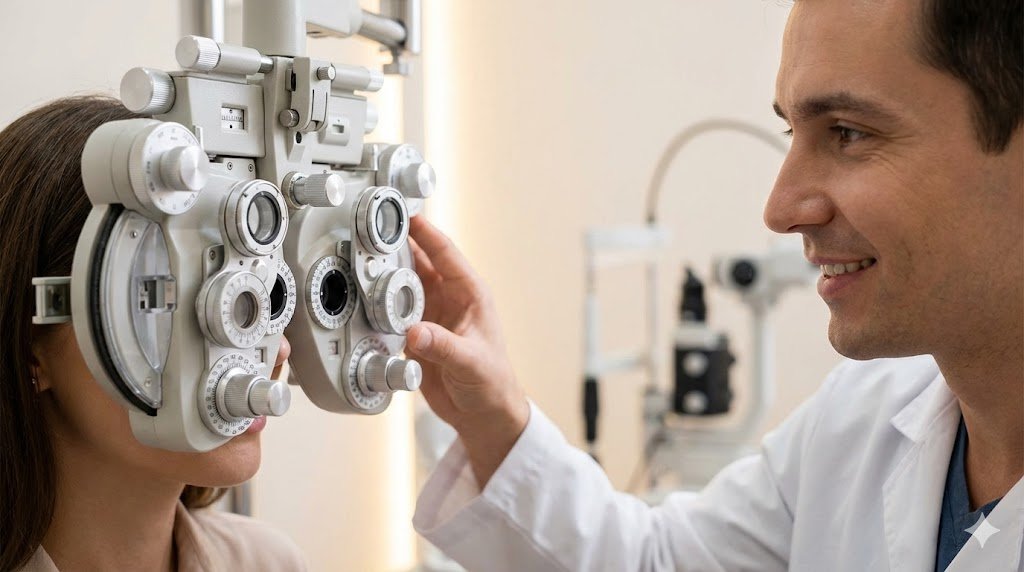
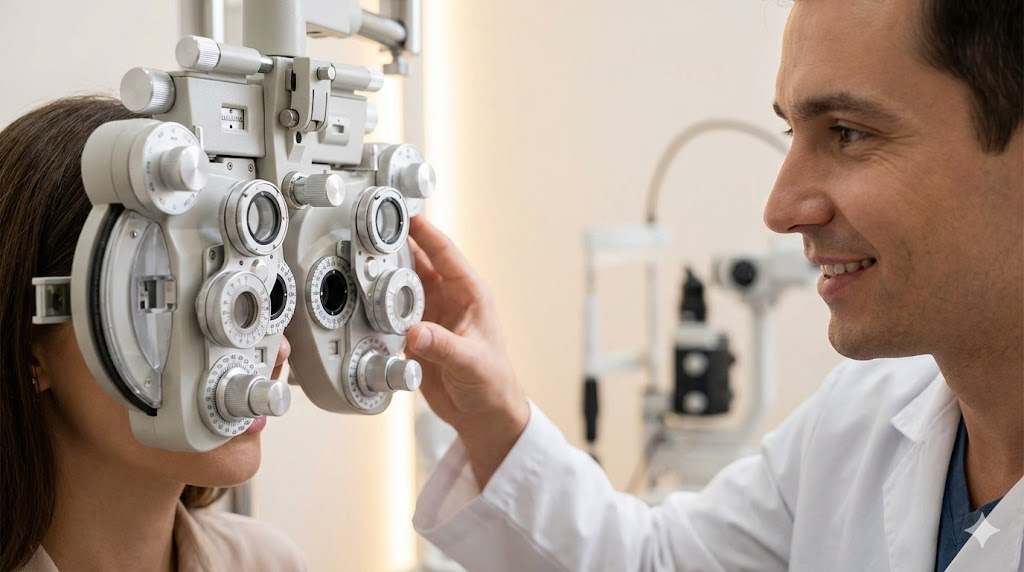
Now you’re in front of that machine I mentioned, the phoropter. Your eye doctor will flip different lenses in front of your eyes and ask, “Is this clearer, or this?” over and over. This is called the refraction test, and it determines your exact prescription for distance vision. It might feel repetitive, but it’s how they dial in your correct prescription. “One or two?” they ask. Honestly, sometimes they’re barely different, but sometimes one jumps out as clearly better.
Eye Pressure Measurement
This is called tonometry, and it measures the pressure inside your eye. The most common method is the “air puff” test a small puff of air hits your eye. It’s uncomfortable but quick and painless. High eye pressure is a risk factor for glaucoma, which can lead to vision loss if untreated. This test catches that early.
Eye Structure Examination
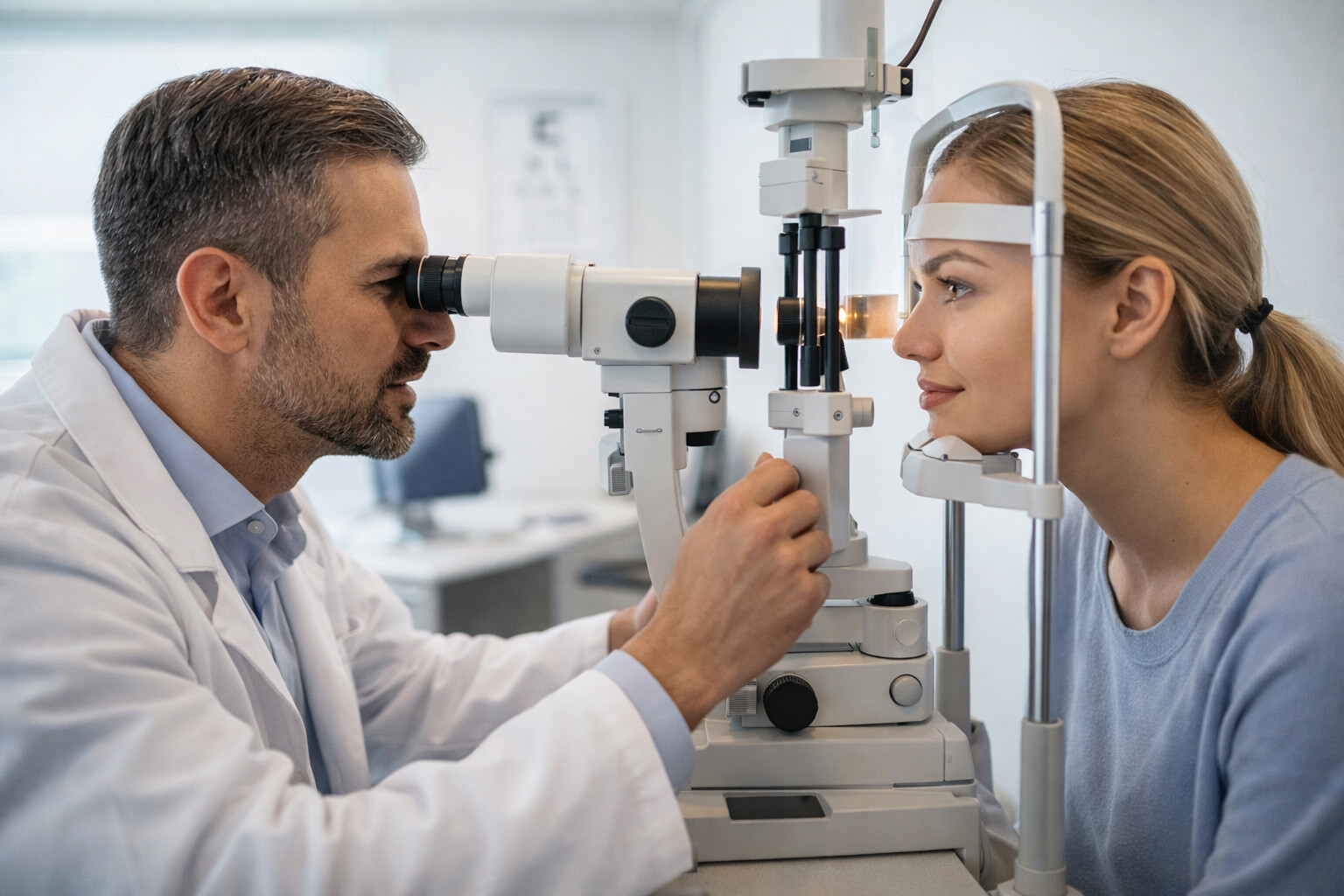
Your eye doctor will use a slit lamp, a specialized microscope with a light, to examine the front of your eye. They’re looking at your cornea, lens, and the front chamber of your eye. They’re checking for cataracts, scratches, infections, or other problems.
Dilated Eye Exam
For a comprehensive exam, your eye doctor will put dilating drops in your eyes. These make your pupils open wider, allowing your doctor to see the back of your eye—the retina, optic nerve, and blood vessels. This is actually important. Many serious eye conditions show up back there first. The dilation makes your vision blurry for a few hours and makes you sensitive to light, which is why people often wear sunglasses when leaving the office.
Other Tests
Depending on your age, risk factors, and what your doctor finds, you might get additional tests. These could include visual field testing (checking your peripheral vision), OCT scans (detailed images of your retina), or fundus photography (pictures of the back of your eye). These tests help catch problems like glaucoma and macular degeneration early.
The whole process usually takes 30-60 minutes, depending on how thorough the exam is and how busy the office is. It might feel long, but your eye doctor is gathering a lot of important information.
When Should You Actually See an Eye Doctor?
This is the question that trips up most people. You might think you only need to see an eye doctor when your vision gets blurry, or you need a new glasses prescription. But the real answer is more complicated and more important.
Age and Eye Health Guidelines
If you’re younger than 40 and don’t have any eye problems or risk factors, most experts recommend seeing an eye doctor every 5-10 years for a comprehensive exam. That’s not asking much, honestly.
If you’re between 40 and 54 without eye problems, move it up to every 2-3 years. Why the change? Because that’s when eye problems start becoming more common. Presbyopia (difficulty focusing up close) usually kicks in around 40. Cataracts can start forming. Your eye doctor is watching for these changes.
Between 55 and 64, aim for every 1-2 years. You’re in the age range where eye disease becomes increasingly common.
After 65, every year is recommended. Your risk of cataracts, glaucoma, macular degeneration, and diabetic eye disease all increases significantly.
If You Have Risk Factors
These guidelines change if you have conditions that affect your eyes. If you have diabetes, you need to see an eye doctor at least once a year, even if your vision seems fine. Diabetic retinopathy can develop without any symptoms, and catching it early prevents vision loss.
If you have high blood pressure, glaucoma risk, or a family history of eye disease, more frequent visits are wise. If you wear contact lenses, you need annual exams at a minimum to ensure the contacts are healthy for your eyes.
When You Should See an Eye Doctor Right Away
Some situations don’t wait for a scheduled appointment. If you experience sudden vision changes, eye pain, flashing lights, new floaters (those little squiggly things floating in your vision), or a sudden increase in floaters, see your eye doctor immediately. Same if you have eye redness that doesn’t go away, discharge from your eye, or trauma to the eye.
These symptoms can indicate serious conditions like retinal detachment, glaucoma attack, or infection. Don’t wait. Call and get in the same day if possible.
What an Eye Doctor Can Actually Diagnose
This is where I think people really underestimate the value of a good eye doctor. These professionals aren’t just checking whether you need stronger glasses.
Common Vision Problems
Of course, your eye doctor diagnoses and corrects refractive errors, such as myopia (nearsightedness), hyperopia (farsightedness), astigmatism, and presbyopia. But that’s just the basic stuff.
Eye Diseases
Your eye doctor can diagnose glaucoma, a condition where the pressure in your eye damages the optic nerve, eventually leading to vision loss if untreated. They can spot cataracts, clouding of the lens that happens with age. They diagnose macular degeneration, a progressive disease that affects central vision in older adults.
They can identify diabetic retinopathy, kidney disease, and high blood pressure just by looking at blood vessel changes in the back of your eye. They can spot signs of thyroid disease, lupus, multiple sclerosis, and sarcoidosis. Some eye conditions are the first visible sign of these systemic diseases.
Dry Eye Syndrome
More people suffer from dry eye than you’d think, especially if you spend a lot of time on screens. Your eye doctor can diagnose this and recommend solutions, from artificial tears to prescription medications to lifestyle changes.
Computer Vision Syndrome
If you spend 8+ hours a day looking at screens, your eye doctor can help with the eye strain, blurred vision, and headaches that result. This is increasingly common and often manageable with simple strategies your eye doctor can suggest.
Color Vision and Depth Perception Issues
Some people are colorblind or have other vision issues they don’t realize. Your eye doctor tests for these.
The point is: an eye doctor visit can catch health problems way beyond your eyesight. That makes it genuinely worth your time.
Glasses vs. Contact Lenses vs. Surgery
Once your eye doctor figures out what your vision problem is, you’ll need to decide how to correct it. There are several options, each with pros and cons.
Glasses
Glasses are straightforward. They’re easy to use, require minimal maintenance, and don’t involve putting anything in your eye. If you’re not a contact lens person, glasses work fine. The downside? They can fog up, you might not like how they look, and they limit your peripheral vision slightly. But honestly, modern frames look good, and many people prefer glasses.
Contact Lenses
Contacts give you a wider field of vision and no frame obstruction. They look invisible (if you want them to). The trade-off is that they require more work; you need to clean them daily, handle them carefully, and remember to take them out at night. Some people have sensitive eyes and can’t tolerate contacts. Your eye doctor will test whether you’re a good candidate and teach you proper insertion and care.
Refractive Surgery (LASIK, PRK)
If you’re tired of glasses or contacts, your eye doctor might mention LASIK. It’s a procedure where a laser reshapes your cornea to correct your vision. It’s expensive (often $1,500-$3,000 per eye), but many people find it worth it. Not everyone is a candidate—your eye doctor needs to evaluate whether you’re suitable. LASIK works well for people with stable vision and certain prescriptions.
Most people choose glasses because they’re the simplest option. Your eye doctor can help you decide what makes sense for your lifestyle and vision.
Why Your Vision Matters More Than You Think
I think we take our vision for granted until something goes wrong. But your eyesight is genuinely one of your most valuable assets. About 30% of the brain is devoted to vision. You depend on it constantly.
Beyond that, vision problems affect quality of life more than people realize. If you’re struggling to see clearly, you might experience headaches, eye strain, and difficulty with daily tasks. You might be less safe while driving, working, or just navigating your environment. You might limit your activities because you can’t see well.
Untreated vision problems affect kids’ school performance. They affect adults’ job performance and safety. They contribute to falls in older adults, which is a serious health issue.
More importantly, catching eye disease early makes a huge difference in outcomes. Glaucoma, if caught early, can often be managed with eye drops to prevent vision loss. But once you lose vision to glaucoma, you can’t get it back. Macular degeneration can be slowed or treated if caught early. Diabetic retinopathy is highly preventable with good diabetes control and regular eye exams.
This is why regular eye doctor visits are preventive care, not just a convenience. You’re potentially protecting yourself from irreversible vision loss.
Finding the Right Eye Doctor for You
Not all eye doctors are created equal, and finding one you feel comfortable with matters.
Where to Look
You can find eye doctors through your health insurance website, through referrals from your primary care doctor, or by searching online. Big retailers like Costco, Walmart, and Target have optical departments with eye doctors on staff. Independent optometry practices exist in most neighborhoods. Many ophthalmology practices are associated with hospitals or larger medical groups.
Questions to Ask
When you’re looking for an eye doctor, consider whether they’re in your insurance network (unless you’re paying out of pocket). Do they have convenient hours and a location? What are their wait times like? Do they have good reviews? Do they seem patient and willing to explain things?
I’d avoid eye doctors who seem rushed or unwilling to answer questions. You’re paying them to care for your health, and you deserve someone who takes that seriously.
First Visit
Your first visit is a good time to assess whether this is the right doctor for you. Did they listen to your concerns? Did they explain things clearly? Did they seem knowledgeable? If not, it’s absolutely fine to try somewhere else. This is your healthcare, and you get to choose your provider.
Eye Doctor Myths and Misconceptions
There are a few common misconceptions about eye doctors that keep people from scheduling appointments. Let me clear these up.
“If I need glasses, my vision will get worse.”
This is false. Your eye doctor prescribes glasses to help you see clearly;y, they don’t make your vision worse. If your prescription needs to change over time, that’s usually due to natural aging, not because you wore glasses.
“I don’t need to see an eye doctor unless something is wrong.”
Not true. Many serious eye diseases, like glaucoma, have no symptoms until significant damage has occurred. Regular exams catch problems before symptoms appear.
“Sitting too close to screens ruins your eyes.”
Screens don’t permanently damage your eyes, though they can cause temporary strain and dryness. Your eyes are remarkably resilient.
“Eye doctors just want to sell you expensive glasses.”
Some eye doctors might push unnecessarily expensive frames, but most are professional and recommend what you actually need. If something feels off, get a second opinion.
“I can’t afford to see an eye doctor.”
Many community health centers offer affordable eye exams. Some nonprofits provide free or low-cost eye care. If cost is a barrier, ask about options rather than skipping care entirely.
The Connection Between Your Eyes and Overall Health
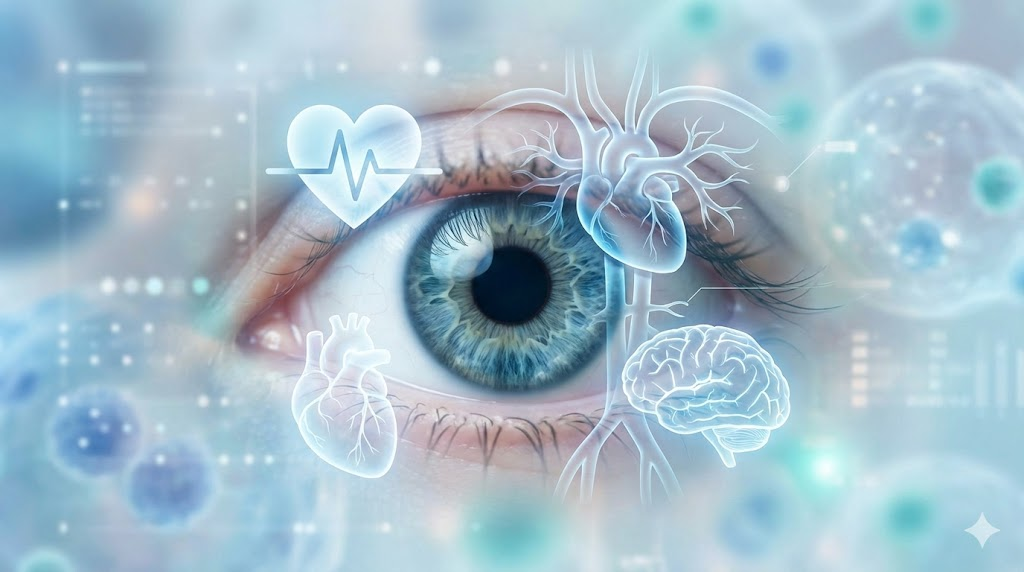
This is genuinely fascinating and something many people don’t know about. Your eyes are literally windows to your health, not just metaphorically, but actually.
Diabetes and Your Eyes
Diabetic retinopathy is the leading cause of blindness in working-age adults. High blood sugar damages blood vessels in the retina. Your eye doctor can often see these changes before you feel any symptoms. Regular exams are how diabetics catch retinopathy early and prevent vision loss.
High Blood Pressure
Hypertensive retinopathy, damage to retinal blood vessels from high blood pressure, shows up in eye exams. Your eye doctor might notice this before you’ve even been diagnosed with high blood pressure.
High Cholesterol
Sometimes, your eye doctor will notice deposits of cholesterol in the blood vessels of your retina, which can hint at cardiovascular risk.
Autoimmune Diseases
Conditions like lupus, rheumatoid arthritis, and Sjögren’s syndrome often affect the eyes. Your eye doctor might be the first to notice signs.
Cancer
Certain cancers can affect the eyes or the tissues around them. Your eye doctor is trained to spot abnormal growths or other suspicious signs.
This is why comprehensive eye exams matter beyond just getting your prescription right. You’re getting a health screening that can catch serious systemic diseases.
What Your Eye Doctor Expects From You
This isn’t talked about much, but there’s a patient side to the equation, too.
Be honest about your symptoms. If you’ve been having headaches, trouble seeing at night, or eye strain, tell your doctor. Be honest about your health history, medications you take, conditions you have, and surgeries you’ve had. This all affects your eye health.
Keep your annual appointments. Don’t wait until you have a vision problem. Make it part of your routine healthcare, like dental checkups.
Follow your doctor’s recommendations. If they prescribe glasses or contacts, actually wear them. If they recommend drops for dry eye or glaucoma, use them. If they refer you to a specialist, follow up.
Take care of your eyes between appointments. Wear sunglasses to protect from UV radiation. Take breaks from screens to reduce eye strain. Don’t rub your eyes roughly. Maintain good hygiene with contact lenses. Eat foods rich in omega-3s and antioxidants, which support eye health.
Basically, treat your eye doctor as a partner in your health, not just someone you visit occasionally.
Common Questions About Eye Doctors
Q: How much does an eye exam cost? A: Without insurance, a comprehensive eye exam typically costs $100-$250. With insurance, you might pay a copay ($20-$50), or the exam might be covered entirely. Many retailers offer discounted exams ($50-$100).
Q: Can an eye doctor diagnose cataracts? A: Yes. Cataracts are very common, and your eye doctor can spot them during a dilated eye exam. If they need surgery, they’ll refer you to an ophthalmologist.
Q: What if I’m scared of eye exams? A: Tell your eye doctor. They’re used to nervous patients and can go slowly, explain what they’re doing, and help you feel more comfortable.
Q: Do I need an exam if I’ve had LASIK? A: Yes. LASIK doesn’t prevent future eye problems. You still need regular exams to catch issues early.
Q: Can eye exams detect autism or ADHD? A: Not directly. But eye doctors might notice certain eye movement patterns that suggest these conditions, and they can refer you to the appropriate specialist.
Q: How often should I update my glasses prescription? A: Usually every 1-3 years, depending on how quickly your prescription changes. Your eye doctor will let you know.
Q: Is it okay to buy glasses online? A: Only after you have a current, accurate prescription from an eye doctor. An online prescription might be cheaper, but you need the exam first.
Making Your Eye Health a Priority
Here’s the bottom line: seeing an eye doctor isn’t just about getting a new glasses prescription. It’s preventive healthcare that can protect your vision and catch serious health problems early.
If you haven’t seen an eye doctor in years, make an appointment. If you have vision symptoms, don’t wait. If you’re in the age range where regular exams are recommended, add it to your healthcare routine, annually or every two years, depending on your age and risk factors.
Your eyes literally show the world to you. They deserve professional care.
Think about your last eye doctor visit. How long ago was it? Are you due? What’s one thing you can do this week to prioritize your eye health? Sometimes the hardest part is just scheduling the appointment, so maybe that’s your first step.
Key Takeaways
- An eye doctor isn’t just checking your vis; on, they’re screening for serious eye diseases and systemic health conditions that show up in your eyes.
- There are different types of eye care professionals (optometrists, ophthalmologists, opticians), and understanding the difference helps you know who to see.
- Most people benefit from regular eye exams: every 5-10 years if you’re under 40 with no risk factors, more frequently as you age or if you have health conditions.
- A comprehensive eye exam includes multiple tests designed to catch problems early, before they damage your vision.
- Many serious eye diseases, like glaucoma, have no symptoms until damage has occurred, making regular screening crucial.
- Your eyes can reveal signs of diabetes, high blood pressure, high cholesterol, autoimmune diseases, and other serious health conditions.
- Taking care of your eye health through regular exams, wearing protection, and managing screen time is an investment in your long-term quality of life and independence.
